Klimaanlage 12000 BTU: Für welche Raumgröße? Test & Kaufberatung (2026)
Table of Contents
Professional Guide to 12000 BTU Air Conditioners: Room Size and Cooling Capacity
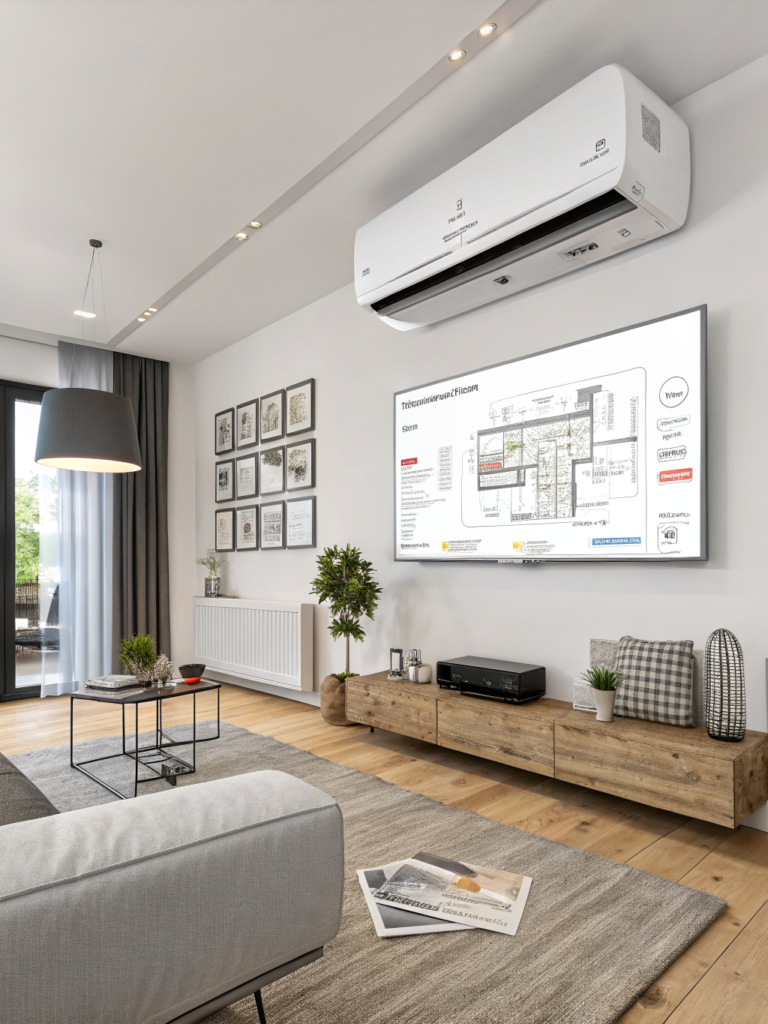
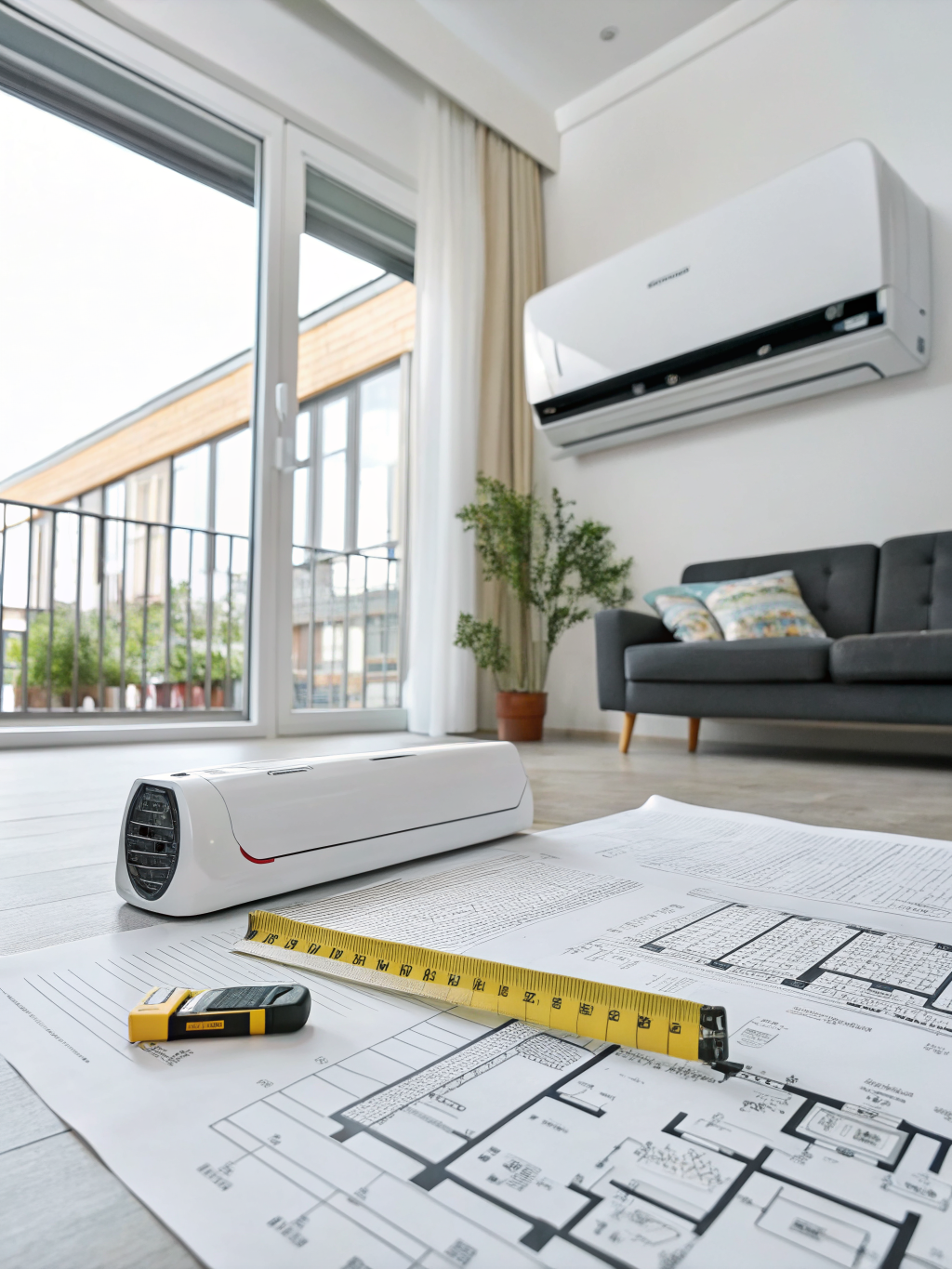
Klimaanlage 12000 BTU a sleek modern living room bathed in natural light showcases a contemporary split air conditioner mounted high on a pristine white wall. The unit’s clean lines and minimalist design complement the Scandinavian-inspired interior, with blonde wood flooring and mid-century furniture arranged throughout the space. In the foreground, an architect’s desk displays rolled floor plans, a professional measuring tape, and detailed HVAC calculation documents spread across a glass surface. The room measures approximately 25-30 square meters, perfectly suited for the cooling capacity of the system. Large windows with sheer curtains filter soft daylight, while the air conditioner’s subtle indicator lights confirm optimal operation. The composition emphasizes the relationship between technical planning and practical installation, with the measuring tools and documentation suggesting careful consideration of room dimensions and thermal load calculations. The space exemplifies German engineering precision and contemporary design sensibility, creating an environment where comfort meets efficiency in residential climate control.
Understanding BTU and Cooling Capacity
The British Thermal Unit (BTU) serves as the standard measurement for air conditioning cooling power, representing the amount of heat energy required to raise one pound of water by one degree Fahrenheit. A 12000 BTU air conditioner can remove 12000 BTUs of heat per hour from your space, making it a mid-range residential cooling solution suitable for specific room dimensions and thermal conditions.
Cooling capacity calculations extend beyond simple BTU ratings. Factors including ceiling height, insulation quality, window orientation, sun exposure, occupancy levels, and heat-generating appliances all contribute to the actual cooling load. A klimaanlage 12000 BTU unit typically covers 350-550 square feet (approximately 32-51 square meters) under standard conditions, though this range varies based on environmental variables and climate zones.
The relationship between BTU capacity and energy efficiency matters significantly for operational costs. Oversized units cycle on and off frequently, failing to adequately dehumidify and wasting electricity. Undersized systems run continuously without achieving comfortable temperatures, straining components and increasing energy consumption. Proper sizing ensures optimal performance, longevity, and cost-effectiveness.
Ideal Room Sizes for 12000 BTU Units
Standard residential applications for 12000 BTU air conditioners include master bedrooms, living rooms, home offices, and open-concept kitchen-dining areas within the 400-550 square foot range. These spaces benefit from the unit’s balanced cooling power without excessive energy consumption or inadequate temperature control.
Regional climate considerations significantly impact appropriate room sizing. In moderate climates with mild summers, a klimaanlage 12000 BTU unit may effectively cool spaces approaching 550 square feet. Conversely, in hot, humid climates or regions with intense solar exposure, the same unit might optimally serve rooms closer to 350-400 square feet to maintain comfortable conditions during peak heat periods.
Ceiling height adjustments require careful attention when calculating cooling needs. Standard BTU recommendations assume 8-foot ceilings. For rooms with 9-foot ceilings, increase the BTU requirement by approximately 12-15%. Spaces with 10-foot or vaulted ceilings may require 20-25% additional capacity. A room with 500 square feet and 10-foot ceilings might need the cooling power typically reserved for 600-625 square feet of standard-height space.
Room Configuration and Layout Factors
Open floor plans present unique cooling challenges that affect BTU requirements. A combined living-dining area totaling 500 square feet requires greater cooling capacity than two separate 250-square-foot rooms due to increased air volume circulation, multiple entryways, and reduced ability to contain cooled air. Architectural features like archways, half-walls, and open staircases compound these demands.
Window quantity, size, and orientation dramatically impact heat gain and cooling requirements. South and west-facing windows receive intense afternoon sun, potentially adding 10-20% to cooling load calculations. Large picture windows or glass doors increase this effect further. Rooms with minimal window coverage or north-facing exposure may operate comfortably with lower BTU capacity than identical spaces with extensive glass surfaces.
Insulation quality determines how effectively cooled air remains within the intended space. Modern construction with proper wall insulation, double-pane windows, and sealed ductwork retains cool air efficiently. Older buildings with single-pane windows, inadequate wall insulation, or air leaks require additional cooling capacity to compensate for thermal losses. A well-insulated 500-square-foot room may need less cooling power than a poorly insulated 400-square-foot space.
Split System vs. Window Unit Considerations
Split air conditioner systems separate the compressor unit (outdoor) from the air handler (indoor), connected by refrigerant lines running through a small wall penetration. This configuration offers quieter indoor operation, improved aesthetics, flexible installation locations, and often higher energy efficiency ratings compared to window units with equivalent BTU capacity.
Window-mounted 12000 BTU units provide simpler installation without permanent wall modifications, making them ideal for rental properties or temporary cooling solutions. However, they occupy window space, block natural light, may compromise window security, and typically generate more indoor noise due to the integrated compressor. Energy efficiency generally lags behind split systems due to thermal bridging and less sophisticated compressor technology.
Portable air conditioners with 12000 BTU capacity offer maximum flexibility but present notable limitations. Heat extraction requires venting hot air through windows or walls, reducing net cooling efficiency. Condensate collection demands regular maintenance, and floor space occupation may prove inconvenient. For permanent cooling solutions in spaces appropriate for klimaanlage 12000 BTU capacity, split systems provide superior performance and efficiency despite higher initial costs.
Energy Efficiency and Operating Costs
Seasonal Energy Efficiency Ratio (SEER) ratings quantify air conditioner efficiency by comparing cooling output to electricity consumption over a typical cooling season. Modern klimaanlage 12000 BTU split systems range from SEER 14 (minimum federal standard) to SEER 25+ for premium models. Higher SEER ratings translate directly to reduced operating costs, with SEER 20 units consuming approximately 30% less electricity than SEER 14 equivalents.
Energy Efficiency Ratio (EER) measurements provide another performance indicator, particularly relevant for regions with extreme heat. EER calculates efficiency at a specific outdoor temperature (typically 95°F/35°C), offering insight into performance during peak cooling demand. For Klimaanlage 12000 BTU units operating in hot climates, high EER ratings ensure consistent efficiency when cooling needs are greatest.
Operating cost calculations for Klimaanlage 12000 BTU units depend on local electricity rates, usage duration, and efficiency ratings. A SEER 16 unit running 8 hours daily for 120 days annually at $0.13 per kWh costs approximately $180-220 in electricity. Upgrading to a SEER 20 model reduces annual costs by $40-50, recouping higher purchase prices through energy savings over the unit’s 15-20 year lifespan.
Installation Requirements and Considerations
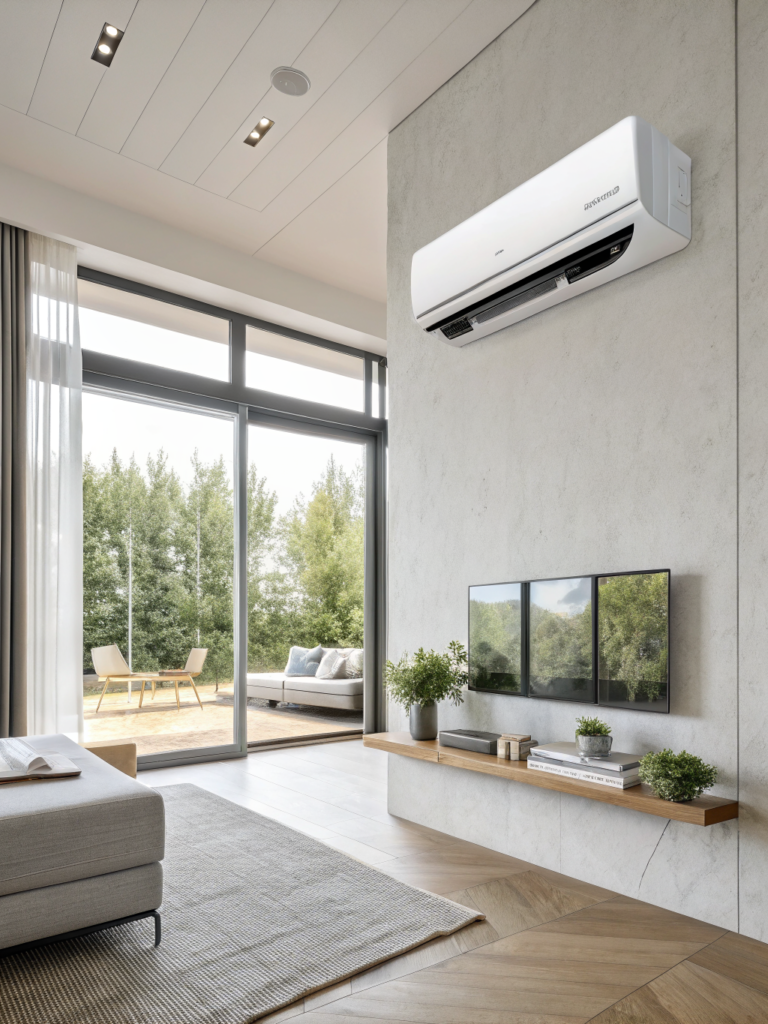
Split system installation demands professional expertise for refrigerant line connection, electrical wiring, condensate drainage, and proper mounting. Indoor units typically install 7-8 feet above floor level on load-bearing walls, positioned for optimal airflow distribution without direct drafts on occupants. Outdoor compressor units require stable mounting surfaces, adequate clearance for airflow, and convenient access for maintenance.
Electrical requirements for klimaanlage 12000 BTU air conditioners typically include dedicated 220-240V circuits with appropriate amperage capacity. Most residential units draw 15-20 amps during operation, necessitating proper circuit breaker protection and wire gauge selection. Installations must comply with local electrical codes, often requiring permitted work by licensed electricians to ensure safety and warranty coverage.
Condensate management prevents water damage and maintains system efficiency. Split systems generate significant moisture during dehumidification, requiring proper drainage through gravity lines, condensate pumps, or evaporation systems depending on installation configuration. Improper drainage causes water leakage, promotes mold growth, and may trigger automatic shutoffs that interrupt cooling operation.
Climate Zone Compatibility
Hot and humid regions including southern United States, tropical, and subtropical zones demand air conditioners that excel at both temperature reduction and dehumidification. A Klimaanlage 12000 BTU unit in these climates optimally serves 350-450 square feet due to high ambient temperatures, intense solar gain, and moisture removal requirements. Units with enhanced dehumidification capabilities and higher EER ratings perform best in these demanding conditions.
Moderate climate zones with warm summers but mild humidity levels allow Klimaanlage 12000 BTU units to effectively cool larger spaces approaching 500-550 square feet. Regions like northern Europe, Pacific Northwest, and mid-latitude areas benefit from seasonal cooling without the extreme thermal loads of perpetually hot climates. Energy efficiency priorities shift toward SEER ratings over EER values in these environments.
Arid desert climates present unique considerations despite high temperatures. Low humidity levels reduce cooling loads by eliminating dehumidification energy demands. A klimaanlage 12000 BTU unit may comfortably cool up to 600 square feet in dry climates, though evaporative cooling systems sometimes provide cost-effective alternatives. Intense solar radiation still necessitates adequate insulation and window treatments to minimize heat gain.
Multi-Zone and Supplemental Cooling Strategies
Multi-zone mini-split systems distribute cooling capacity across multiple rooms using one outdoor compressor and several indoor air handlers. A Klimaanlage 12000 BTU multi-zone system might supply 6000 BTU to a bedroom and 6000 BTU to an office, offering flexible climate control for separate spaces. This configuration suits homes requiring cooling in non-adjacent areas without ducting multiple outdoor units.
Supplemental cooling strategies extend comfort to spaces slightly exceeding optimal square footage for a single Klimaanlage 12000 BTU unit. Ceiling fans enhance air circulation and create wind-chill effects that make rooms feel 3-4°F cooler without additional cooling capacity. Strategic use of window treatments, thermal curtains, and exterior shading reduces solar heat gain, allowing existing systems to maintain comfort in marginally oversized spaces.
Zoning strategies within larger rooms maximize comfort and efficiency. Positioning a klimaanlage 12000 BTU unit to prioritize cooling in primary activity areas while accepting warmer temperatures in peripheral spaces extends effective coverage. This approach works well in open-concept homes where kitchen heat generation or bedroom sleeping comfort takes priority over uniform temperatures throughout connected areas.
Maintenance and Performance Optimization
Filter maintenance directly impacts cooling performance and energy efficiency. Most klimaanlage 12000 BTU split systems feature removable, washable filters requiring cleaning every 2-4 weeks during heavy use. Dirty filters restrict airflow, reducing cooling capacity by 5-15% while forcing the compressor to work harder and consume more electricity. Regular cleaning takes 10 minutes and significantly extends equipment lifespan.
Professional maintenance services should inspect klimaanlage 12000 BTU systems annually, preferably before cooling season begins. Technicians check refrigerant levels, clean condenser coils, verify electrical connections, test capacitors, lubricate motors, and identify potential issues before they cause failures. Annual maintenance costs typically range from $100-150 but prevent expensive repairs and maintain warranty coverage.
Thermostat programming optimizes comfort and energy efficiency by adjusting temperatures based on occupancy patterns. Setting temperatures 5-8°F higher when spaces are unoccupied reduces energy consumption by 10-15% without sacrificing comfort during occupied periods. Smart thermostats learn usage patterns, provide remote control, and display energy consumption data that helps optimize cooling strategies.
Advanced Features and Technology
Inverter technology revolutionized air conditioner efficiency by replacing single-speed compressors with variable-speed systems that adjust cooling output to match demand precisely. Inverter-equipped klimaanlage 12000 BTU units modulate between 30-110% capacity, maintaining consistent temperatures with minimal temperature fluctuations and 30-50% energy savings compared to conventional on-off cycling systems.
Wi-Fi connectivity and smartphone control enable remote operation, scheduling customization, and real-time monitoring of Klimaanlage 12000 BTU systems from anywhere. Users adjust settings before arriving home, receive maintenance reminders, track energy consumption, and troubleshoot issues through manufacturer apps. Integration with smart home platforms allows voice control and automation based on occupancy sensors or weather forecasts.
Air purification features increasingly accompany cooling functions in premium Klimaanlage 12000 BTU models. Built-in filters capture dust, pollen, and allergens while some systems incorporate UV sterilization, ionizers, or photocatalytic oxidation to eliminate bacteria, viruses, and odors. These features particularly benefit occupants with allergies, asthma, or respiratory sensitivities, creating healthier indoor environments beyond temperature control alone.
Special Application Considerations
Home office environments present unique cooling challenges with heat-generating computers, monitors, and office equipment adding to thermal loads. A 400-square-foot home office may require a full klimaanlage 12000 BTU capacity despite falling within the typical coverage range for larger spaces. Consider equipment heat output when sizing air conditioners for technology-intensive rooms.
Kitchens generate substantial heat from cooking appliances, ovens, and refrigerators. Open-concept spaces incorporating kitchens need additional cooling capacity beyond basic square footage calculations. A 450-square-foot great room with an integrated kitchen may require 12000-15000 BTU capacity depending on cooking frequency and appliance types.
Sunrooms and spaces with extensive glazing demand careful capacity evaluation. Three-season sunrooms with minimal insulation may require nearly double the standard BTU capacity per square foot due to extreme heat gain. A 300-square-foot sunroom might need a full klimaanlage 12000 BTU unit, while the same square footage in a standard room would comfortably operate with 6000-8000 BTU capacity.
Cost Analysis and Value Proposition
Initial purchase prices for klimaanlage 12000 BTU air conditioners range from $600-900 for quality window units to $1500-3000 for mid-range split systems, with premium models exceeding $4000. Installation costs add $500-1500 for split systems requiring professional setup. While initial investments seem substantial, properly sized, efficient systems provide 15-20 years of reliable service with appropriate maintenance.
Lifetime cost calculations reveal that higher-efficiency models justify premium prices through energy savings. A $2000 SEER 20 split system consumes $50-70 less electricity annually than a $1200 SEER 14 unit. Over 15 years, the efficient model saves $750-1050 in energy costs, offsetting its higher purchase price while providing superior comfort and potentially higher home resale value.
Warranty coverage varies significantly between manufacturers and models. Standard warranties typically cover parts for 5-7 years with 1 year labor coverage, while compressors may carry extended 7-10 year warranties. Premium models sometimes include 10-year comprehensive coverage. Warranty terms influence total ownership costs by protecting against expensive component failures during the coverage period.
Making the Final Selection Decision
Room measurement accuracy forms the foundation of proper air conditioner sizing. Measure length and width precisely, multiply for square footage, then apply adjustment factors for ceiling height, insulation quality, window exposure, and climate zone. Online BTU calculators from manufacturers and HVAC organizations provide structured frameworks for incorporating these variables into sizing decisions.
Professional HVAC consultations offer valuable expertise for complex installations or borderline sizing situations. Technicians perform detailed heat load calculations considering construction details, orientation, occupancy patterns, and local climate data. The $100-200 consultation cost prevents expensive mistakes in equipment selection and ensures optimal system performance.
Future-proofing considerations should influence equipment selection. Climate change trends toward warmer temperatures, potential room usage changes, and home additions might justify selecting equipment at the higher end of recommended capacity ranges. However, avoid oversizing by more than 10-15% as excessive capacity compromises dehumidification and efficiency regardless of future considerations.